
Governance
Which version of the agent said that?
An agent is its configuration, and configuration changes. If you cannot say which version produced an answer, you cannot say whether the problem is already fixed.
A customer forwards a reply your agent sent three weeks ago. It is wrong - not wildly, but enough to matter. You open the agent, read its instructions, and they look fine. They look fine because someone tightened them a fortnight ago. The version that wrote the reply no longer exists anywhere you can see.
This is the most ordinary problem in running agents, and it has nothing to do with models. It is a versioning problem.
An agent is its configuration
Software teams take it for granted that a running system can be traced to a commit. Agents tend to lose that property on day one, because the thing that defines their behaviour - instructions, tools, knowledge, limits, which actions are gated - lives in a settings screen that someone edits in place.
Edit in place and the history is gone. As far as anyone can tell, the agent that exists today is the only agent there has ever been.
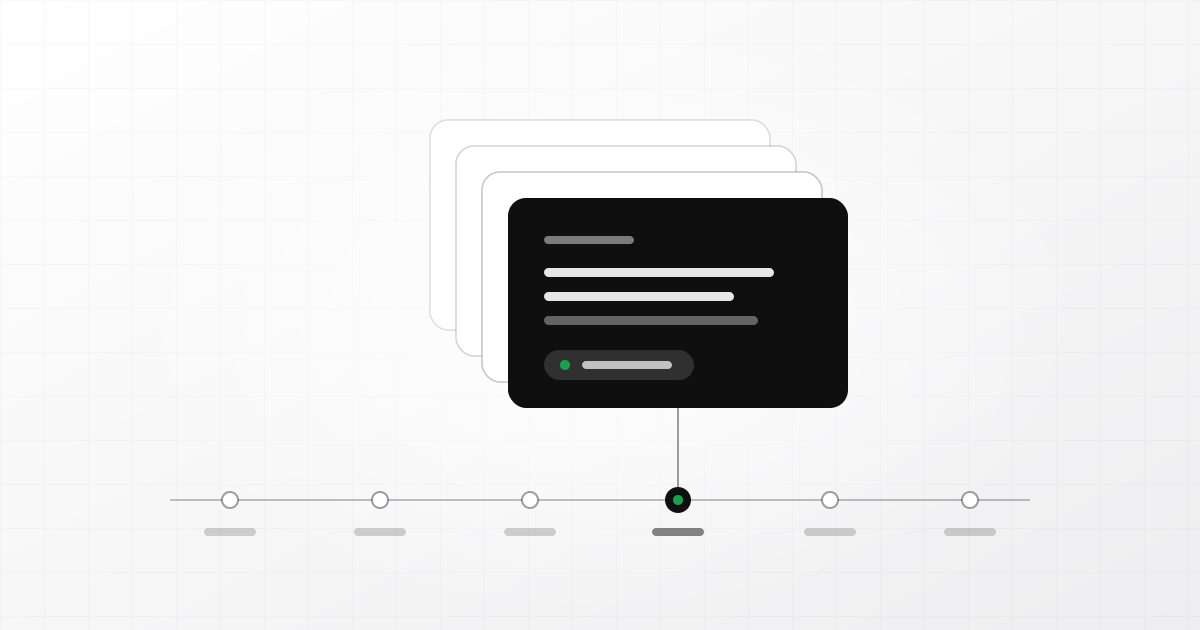
In Yekar.AI a change to an agent's setup creates a new revision instead of overwriting the old one. Revisions accumulate, and one of them is live.
Every turn knows its revision
A history of revisions is only half of it. The other half is that each turn the agent takes is recorded against the revision that was live when it ran. That turns "which version said that?" from archaeology into a lookup: find the turn, read the revision, see the configuration as it was.
If you cannot say which version of the agent gave an answer, you cannot say whether the problem still exists.
Did the change help?
The same link answers the question people care about most after they change something. Everyone who edits an agent's instructions believes they made it better. Without revisions, the evidence is a feeling. With them, you can set the turns before a change beside the turns after it - how often answers were grounded, how often something had to be repaired - and see.
It also keeps the numbers straight. An average taken across a period that includes a fix blends the fix with the problem it fixed, and tells you about neither.
Small habits that make this work
- Change one thing at a time. A revision that rewrites the instructions, swaps the model and adds a tool tells you nothing about which of the three mattered.
- Write down why, somewhere your team will find it. One line of explanation is worth more in three months than it costs today.
- Look before you celebrate. Give a change enough real turns to show its effect before deciding it worked.
None of this is new. It is what version control did for code, applied to the thing that now decides how an agent behaves. The only surprise is how many agents run without it.