
Engineering
An agent your other tools can call
Most talk about MCP is about what an agent can reach. The other direction is at least as useful: the agent itself, offered as a server to the clients your team already works in.
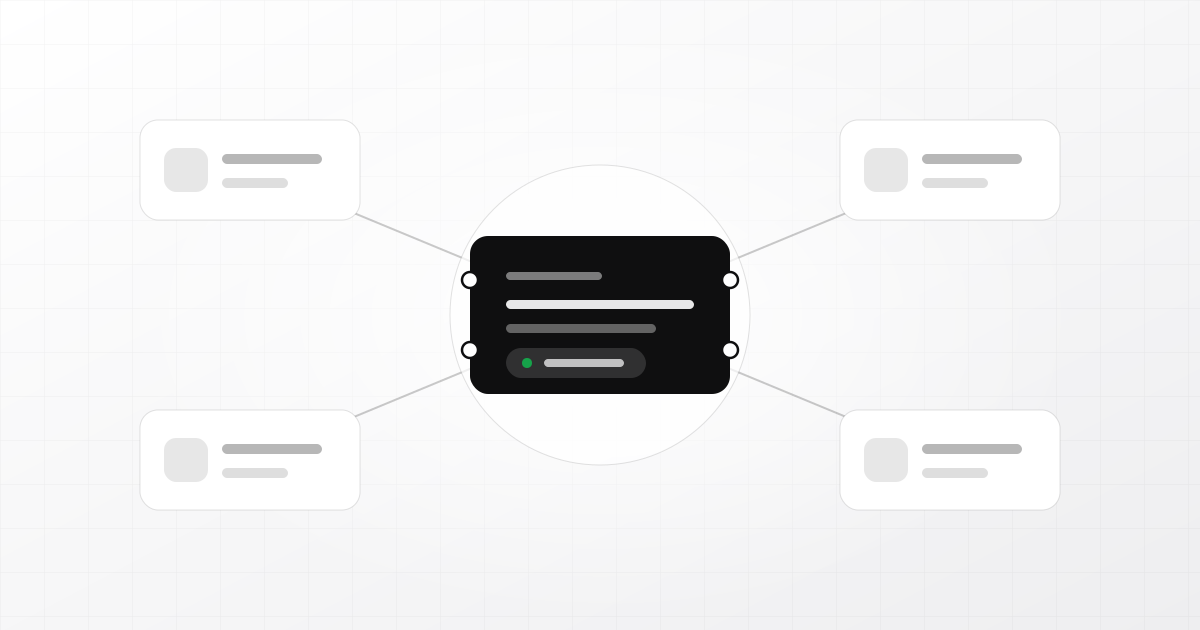
The Model Context Protocol is usually explained from one side. An agent needs tools; MCP is a standard way to give it some. Connect a server, and the agent can read your tickets or query your database without anyone writing a bespoke integration.
That direction matters. But the protocol is symmetrical in a way that gets less attention. Anything that can describe itself as a set of tools can be a server - including an agent.
Turning the arrow around
Say your team has built an agent that knows your refund policy and can look up an order. It works well. Now a developer wants that same capability inside their editor, an analyst wants it in the assistant they already use, and an agent on another team needs to ask it a question.
The slow way is to rebuild the logic in three places. The better way is to expose the agent once, as an MCP server, and let each of those clients call it. In Yekar.AI an agent can be promoted to do exactly that.
Why this beats copying the prompt
The tempting shortcut is to paste the agent's instructions into each new place. It works for about a week. Then the policy changes, one copy gets updated, and you have three agents that disagree with each other and no way to tell which one a given answer came from.
An agent offered as a server stays one agent. One set of instructions, one body of knowledge, one place to change when the policy does. The clients are just different doors into it.
Copy an agent's prompt into three tools and you have three agents. Expose it once and you still have one.
Promotion is a decision
Not every agent should be callable from outside. One built for a single team may have been given access on the assumption that only that team would ever talk to it. So exposing an agent is a deliberate step, taken by someone with the authority to take it - not a switch that is on by default.
The questions worth asking first are the ones that apply to any new way into a system.
- Who will be calling it, and as whom? The identity question does not go away because the caller is another piece of software.
- What can it change? An agent that only answers questions is far easier to expose than one that takes actions.
- Would its answers still make sense to someone outside the team that built it?
Where this goes
The interesting consequence is what it does to the shape of a company's agents. Instead of each tool growing its own slightly different assistant, a team can build a handful of agents that each know one area well, and make them available wherever the work happens. The editor, the chat client and the next agent along all ask the same source.
That is most of what "ship it anywhere" means in practice. Not an agent in every tool. One agent, reachable from all of them.